

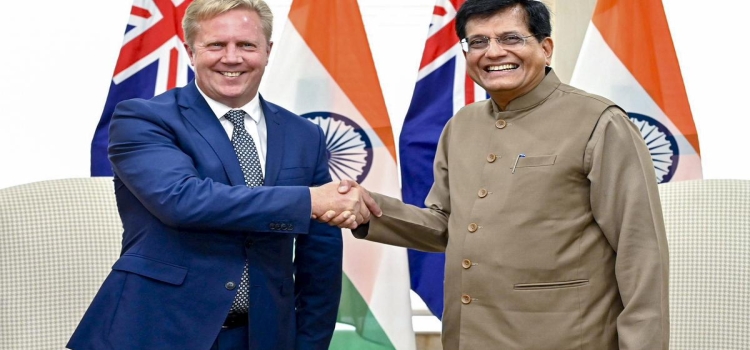
India New Zealand wind up FTA talks set to boost trade
New Delhi hopes to double trade with Wellington as discussions conclude; island nation promises 5,000 work visas every year; Prime Minister Modi hails ‘historic milestone’ for ‘shared ambition’
India and New Zealand on Monday concluded discussions on a free trade agreement (FTA) that will give India tariff-free access to the island nation’s markets, bring in $20 billion in investments over 15 years, and help double bilateral trade to $5 billion in the next five years.
The deal will remove or cut tariffs on 95% of New Zealand’s exports — from timber to fruits — to India, but New Delhi safeguarded the interests of its farmers and dairy farmers, considered politically sensitive, and made no concessions on import of dairy, onions, sugar, spices, edible oils, and rubber. New Zealand will give temporary employment visas for Indian professionals in skilled occupations with a quota of 5,000 visas annually and a stay of up to three years.
Union Minister for Commerce Piyush Goyal said the government has been “sensitive in protecting interests” of farmers and dairy persons. “Rice, wheat, dairy, soya and various other agricultural products have not been opened up with any access,” he said.
India and New Zealand on Monday concluded discussions on a free trade agreement (FTA) that will give India tariff-free access to the island nation’s markets, bring in $20 billion in investments over 15 years, and help double bilateral trade to $5 billion in the next five years.
The deal will remove or cut tariffs on 95% of New Zealand’s exports — from timber to fruits — to India, but New Delhi safeguarded the interests of its farmers and dairy farmers, considered politically sensitive, and made no concessions on import of dairy, onions, sugar, spices, edible oils, and rubber. New Zealand will give temporary employment visas for Indian professionals in skilled occupations with a quota of 5,000 visas annually and a stay of up to three years.
Union Minister for Commerce Piyush Goyal said the government has been “sensitive in protecting interests” of farmers and dairy persons. “Rice, wheat, dairy, soya and various other agricultural products have not been opened up with any access,” he said.
Hailing the FTA, to be signed in the first half of 2026, Prime Minister Narendra Modi said, “Concluded in just nine months, this historic milestone reflects a strong political will and shared ambition to deepen economic ties between our two countries.”
Mr. Modi spoke to his New Zealand counterpart Christopher Luxon over the phone before the two leaders jointly announced the conclusion of the “historic, ambitious and mutually beneficial India-New Zealand Free Trade Agreement (FTA),” said an official statement.
“The FTA would significantly deepen bilateral economic engagement, enhance market access, promote investment flows, strengthen strategic cooperation between the two countries, and also open up new opportunities for innovators, entrepreneurs, farmers, MSMEs, students and youths of both countries across various sectors,” the External Affairs Ministry said.
The pact will help Indian exporters, reeling under the impact of 50% tariffs imposed by the Trump administration on Indian goods, diversify shipments in the Oceania region. India has already implemented a trade pact with Australia.
The Minister said the agreement will provide a fillip to labour-intensive sectors such as apparel, leather, textiles, rubber, footwear and home decor. It will encourage export of automobiles, auto components, machinery, electronic goods and electrical and pharmaceuticals, he said.
The temporary employment visas cover AYUSH practitioners, yoga instructors, Indian chefs, and music teachers, as well as high-demand sectors including IT, engineering, healthcare, education, and construction, strengthening workforce mobility and services trade.